

An operation theatre depends on precise coordination. Surgeons and anaesthesia professionals lead the clinical procedure, while nurses, technicians and support staff help maintain a safe, organised and sterile environment. An operation theatre technician contributes to this system by assisting with theatre preparation, equipment readiness and infection-control routines.
Students considering an O.T. Technician course in Pune should understand that the role requires discipline and composure. It can be rewarding for people interested in surgical healthcare, but it also involves strict protocols and considerable responsibility.
KP Paramedical Institute offers learning opportunities for students exploring paramedical careers in Pune. Operation theatre technology is one such pathway for those who prefer a structured clinical setting and can work effectively as part of a surgical team.
Responsibilities Inside an Operation Theatre
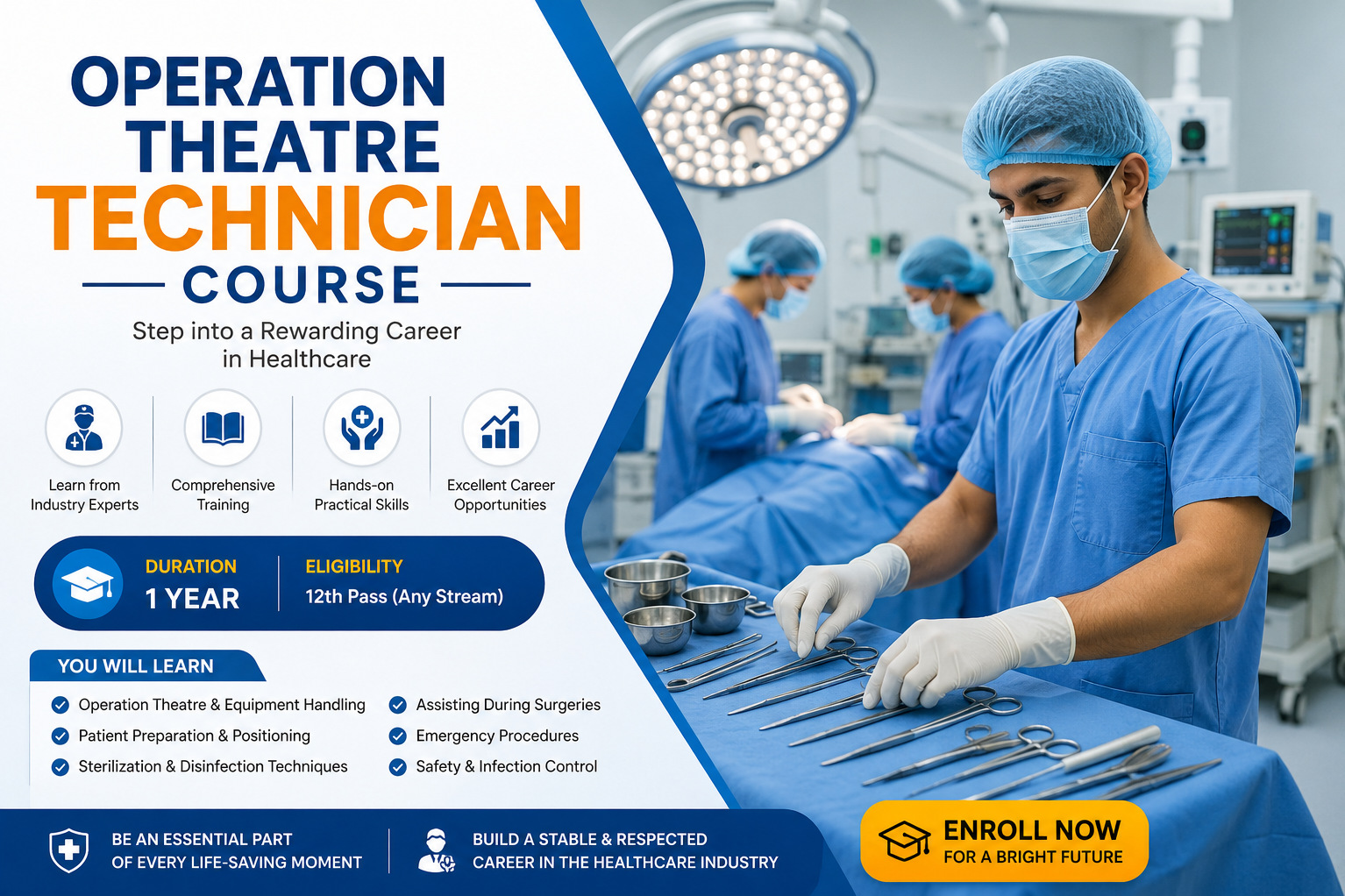
The exact duties of a technician depend on training, experience and hospital policy. Under appropriate supervision, responsibilities may include:
- Preparing the operation theatre before a procedure
- Checking the availability of required supplies
- Assisting with instrument arrangement
- Supporting sterilisation and disinfection protocols
- Checking basic equipment readiness
- Helping maintain restricted and sterile zones
- Moving supplies according to theatre procedures
- Following biomedical waste-management rules
- Assisting with post-procedure theatre preparation
- Maintaining records and inventory as assigned
An O.T. technician does not replace a surgeon, nurse or anaesthesia professional. The technician works within a defined support role and follows the directions of qualified clinical personnel.
What Students Learn During O.T. Technician Training
The course typically combines basic medical science with operation theatre procedures. Depending on the programme, students may study:
- Anatomy and physiology
- Medical terminology
- Basic surgical procedures
- Surgical instruments
- Sterilisation methods
- Infection prevention
- Operation theatre layout and zones
- Patient positioning awareness
- Anaesthesia equipment basics
- Emergency protocol awareness
- Ethics and patient confidentiality
- Inventory and theatre documentation
Practical exposure is important because students must learn how theoretical protocols are followed in a controlled clinical environment.
Is Operation Theatre Work Suitable for Everyone?
The surgical environment can be demanding. Students should assess their comfort with medical procedures, blood, protective clothing and long periods of focused work.
The role may be suitable for someone who:
- Can follow instructions accurately
- Pays close attention to hygiene
- Remains calm in high-pressure situations
- Works well within a team
- Respects patient privacy
- Can maintain concentration during lengthy procedures
- Understands the importance of punctuality and preparation
Small lapses can disrupt theatre workflow, so reliability is an important professional quality.
Career Settings in Pune
After completing an appropriate and recognised qualification, candidates may explore suitable technician or assistant roles in:
- Multispeciality hospitals
- Surgical hospitals
- Maternity hospitals
- Orthopaedic centres
- Eye hospitals
- Day-care surgery centres
- Emergency and trauma facilities
- Specialised operation theatre units
Pune’s healthcare infrastructure serves patients from across the city and neighbouring regions of Maharashtra. This gives students a useful regional context for understanding hospital systems and surgical support services.
Choosing the Right Training Programme
Before taking admission, applicants should compare programme recognition, faculty experience, laboratory or demonstration facilities, practical sessions and hospital exposure. They should also ask how sterilisation practices, equipment handling and emergency protocols are taught and assessed.
An O.T. Technician course can provide a focused entry into surgical support services. Students who develop strong procedural discipline, respect clinical boundaries and take practical training seriously can build a dependable foundation for work in operation theatre environments.