

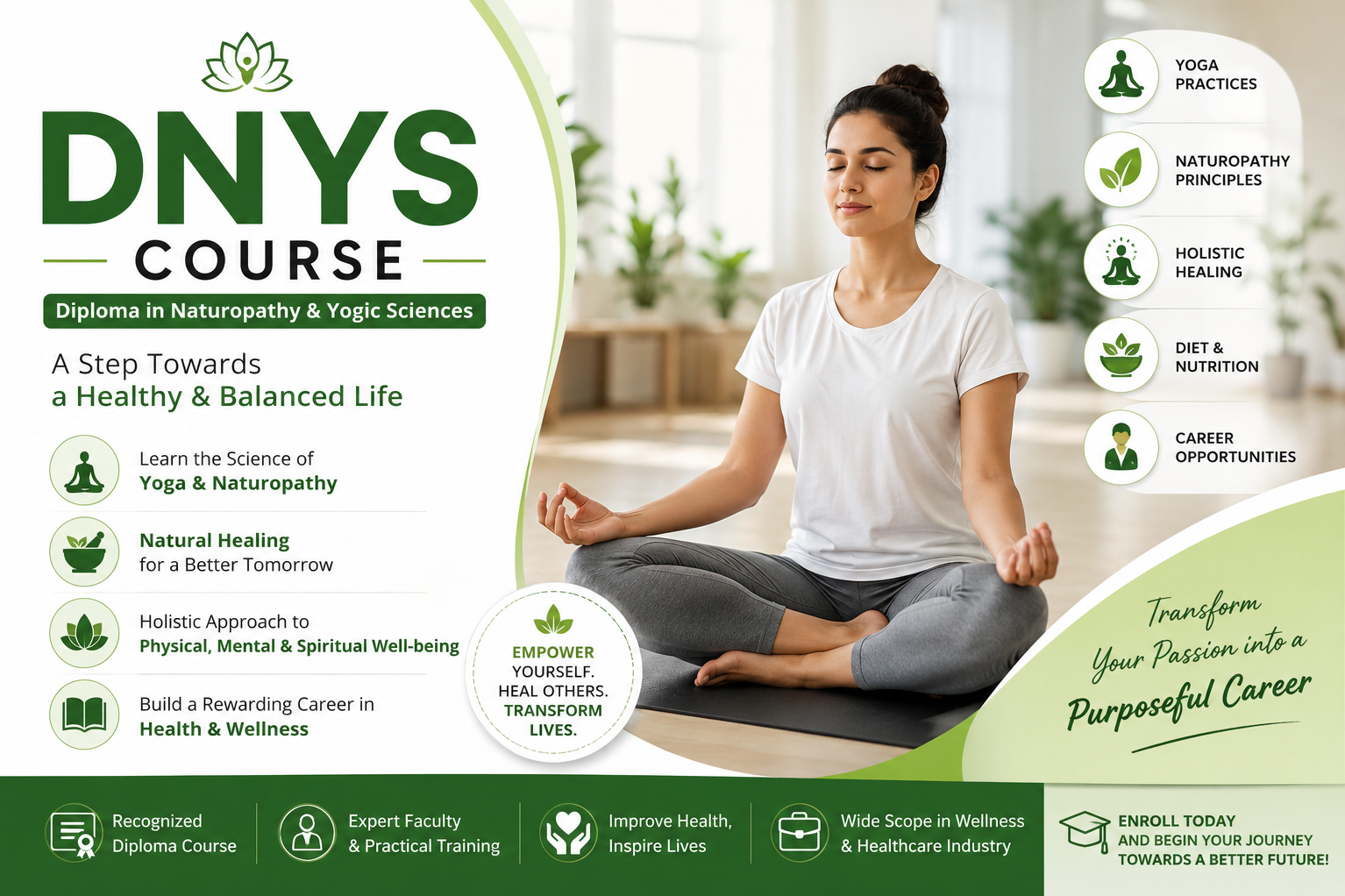
Growing interest in preventive health, lifestyle management and non-pharmacological wellness practices has encouraged students to explore courses related to naturopathy and yoga. DNYS commonly refers to a Diploma in Naturopathy and Yogic Sciences, a programme that introduces learners to natural health principles, yoga practices and lifestyle-focused wellness education.
Students searching for a DNYS course in Pune should understand the scope of the qualification before enrolling. The programme is different from conventional medical education and should not be confused with a medical degree or licence to practise beyond the qualification’s permitted scope.
KP Paramedical Institute offers educational pathways for learners exploring health-related and paramedical fields in Pune. A careful review of the DNYS curriculum, practical sessions and certification details can help students set realistic expectations.
What May Be Included in DNYS Training?
The curriculum can vary between institutions, but common areas of study may include:
- Fundamentals of naturopathy
- Basic anatomy and physiology
- Principles of yoga
- Yoga postures and breathing practices
- Relaxation and meditation techniques
- Nutrition and lifestyle awareness
- Basic hydrotherapy concepts
- Natural health practices
- Stress-management principles
- Personal hygiene and preventive wellness
- Communication and client guidance
- Professional ethics
Students should obtain the current syllabus directly from the institute because course titles alone do not reveal the academic depth or practical requirements.
Potential Benefits of Studying DNYS
A well-structured programme may help learners develop a broader understanding of daily wellness habits. Its benefits can include:
- Knowledge of preventive practices: Students learn how routine, movement, rest and diet may influence general well-being.
- Understanding of yoga principles: The course can provide structured exposure to postures, breathing and relaxation practices.
- Improved communication skills: Learners may develop the ability to explain basic wellness practices clearly.
- Personal health awareness: Many students apply appropriate lifestyle principles to their own routines.
- Foundation for further learning: The diploma may encourage additional study in yoga, wellness education or related fields.
These benefits depend on the programme’s quality and the student’s consistent participation.
What DNYS Does Not Automatically Authorise
Students should be cautious about exaggerated claims surrounding naturopathy and yoga qualifications. Completing a diploma does not automatically authorise a person to diagnose diseases, prescribe medicines or present themselves as a medical doctor.
Graduates must understand:
- The legal and professional limits of their qualification
- When a client should be referred to a qualified medical professional
- Why existing treatment should not be altered without medical advice
- The importance of avoiding guaranteed cure claims
- The need to maintain accurate and ethical communication
Responsible wellness guidance complements appropriate healthcare; it should not be presented as a universal replacement for medical treatment.
Questions to Ask a DNYS Institute in Pune
Before admission, applicants should ask:
- What are the eligibility requirements?
- What is the total course duration?
- Who awards the certificate or diploma?
- How many practical sessions are included?
- Are yoga practices taught under supervision?
- How are students assessed?
- Does the course explain professional scope and ethics?
- What further education options may be available?
Clear answers help students distinguish structured education from programmes built mainly around promotional promises.
Possible Areas of Work and Learning
Depending on their qualification and applicable requirements, graduates may explore suitable roles in yoga centres, wellness facilities, community programmes, fitness environments or self-employment within permitted boundaries. Some learners may pursue advanced education to build deeper subject knowledge.
Pune has an active education, fitness and wellness community, with learners arriving from different parts of Maharashtra. For students interested in lifestyle-focused health education, DNYS can provide a useful foundation when chosen with care.
The best programme is one that combines accurate theory, supervised practice and ethical clarity. Students who understand both the value and limits of their training are better prepared to use their knowledge responsibly.