

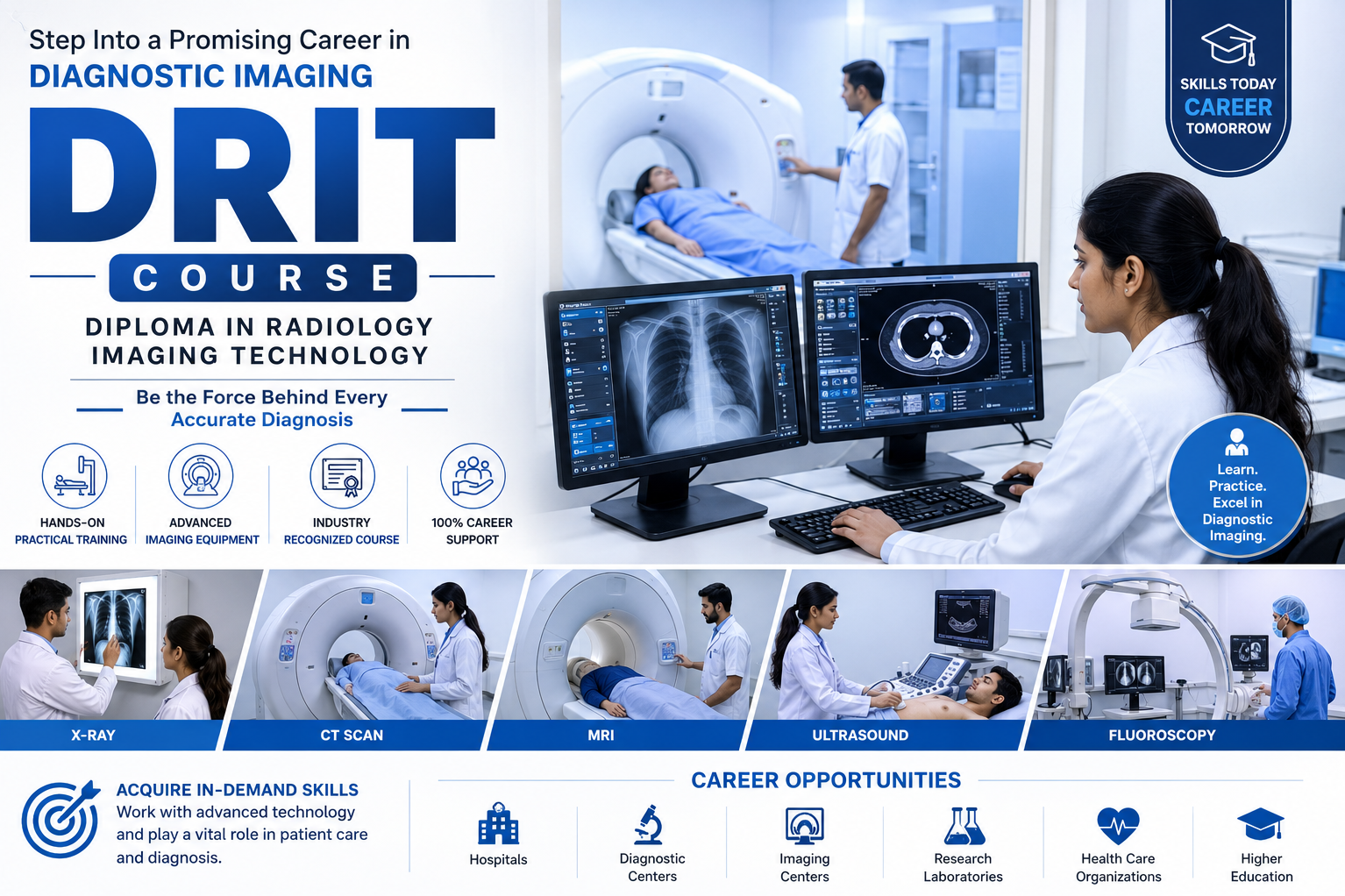
Radiology and medical imaging help doctors examine internal structures, investigate symptoms and monitor certain conditions. Imaging departments use specialised equipment and strict safety procedures, making trained technical support an important part of their daily operations.
DRIT, or Diploma in Radiology and Imaging Technology, is intended for students interested in diagnostic imaging and hospital-based technical work. Before enrolling in a DRIT course in Pune, applicants should examine the quality of instruction, clinical exposure and radiation-safety education included in the programme.
KP Paramedical Institute offers paramedical learning options for students considering healthcare careers in Pune. When evaluating radiology training, students should focus on whether the programme builds both technical understanding and responsible professional behaviour.
What Does a DRIT Course Cover?
The course generally begins with basic medical subjects before introducing imaging principles and departmental procedures. Depending on the curriculum, students may learn about:
- Human anatomy and physiology
- Medical terminology
- Basic radiographic principles
- Imaging equipment components
- Patient positioning fundamentals
- Radiation physics
- Radiation protection
- Darkroom or digital imaging processes
- Patient preparation
- Infection-control practices
- Medical records and documentation
- Professional ethics
Training should help students understand that producing an image is only one part of the process. Patient identity, positioning, equipment preparation, safety checks and clear communication are equally important.
Why Clinical Exposure Matters
Radiology cannot be learned effectively through theory alone. Students need supervised exposure to understand departmental workflow and the safety standards followed around imaging equipment.
Meaningful practical training may help learners observe:
- How patients are prepared for imaging procedures
- How positioning affects image quality
- How equipment is checked before use
- How radiation exposure is controlled
- How patient privacy is maintained
- How imaging records are stored and handled
- How technicians coordinate with radiologists and other professionals
Students should never perform procedures independently unless their training, authorisation and supervision permit it.
How to Compare DRIT Courses in Pune
Not every programme provides the same learning experience. Applicants should assess the following areas before making a decision.
Qualification details
Confirm the complete name of the programme, its duration, the awarding body and its recognition or acceptance for the intended career path.
Teaching faculty
Ask whether relevant subjects are taught by instructors with suitable academic knowledge or clinical experience.
Practical facilities
Find out whether students receive demonstrations, equipment familiarisation and supervised clinical exposure.
Safety training
Radiation protection should be treated as a core subject. The programme should explain shielding, controlled areas, exposure reduction and workplace protocols.
Assessment standards
A credible course should assess theoretical knowledge as well as practical competencies, professional conduct and safety awareness.
Career Environments After Training
Eligible candidates may explore appropriate entry-level opportunities in hospitals, diagnostic centres, imaging clinics, orthopaedic facilities and other healthcare settings. Actual responsibilities depend on the qualification, employer policies, equipment used and regulatory requirements.
Pune has an established healthcare network serving patients from the city and nearby parts of Maharashtra. This makes awareness of modern diagnostic workflows particularly valuable for local students.
A Practical Decision, Not Just a Course Choice
DRIT can suit learners who are comfortable working with technology, following exact instructions and communicating respectfully with patients. It also demands careful attention to radiation safety and professional boundaries.
Before enrolling, students should compare the syllabus, practical exposure and qualification details carefully. A course that combines scientific foundations, supervised training and strong safety practices provides a more dependable beginning in radiology and imaging technology.