

Medical laboratories play an essential role in modern healthcare. Doctors often depend on laboratory reports to identify illnesses, assess organ function and monitor a patient’s response to treatment. A Diploma in Medical Laboratory Technology, commonly known as DMLT, introduces students to the scientific and practical processes behind this diagnostic work.
For students considering a DMLT course in Pune, understanding the curriculum and career scope can make the decision easier. The course is particularly relevant for learners interested in healthcare who prefer laboratory-based responsibilities over direct patient care.
KP Paramedical Institute in Pune provides paramedical education for students seeking practical exposure and career-focused learning. A DMLT programme generally combines classroom instruction with laboratory demonstrations and supervised technical practice.
What Do Students Learn in DMLT?
The curriculum is designed to build a foundation in medical science before introducing specialised laboratory procedures. Subjects may vary according to the programme structure, but commonly covered areas include:
- Human anatomy and physiology
- Clinical pathology
- Haematology
- Biochemistry
- Microbiology
- Blood banking
- Immunology
- Laboratory equipment handling
- Sample collection and preservation
- Biomedical waste management
- Laboratory safety and infection control
Students also learn why accuracy matters at every stage of testing. A mistake during sample collection, labelling, storage or processing can affect the reliability of a report. Therefore, attention to detail is as important as technical knowledge.
Practical Skills Developed During the Course
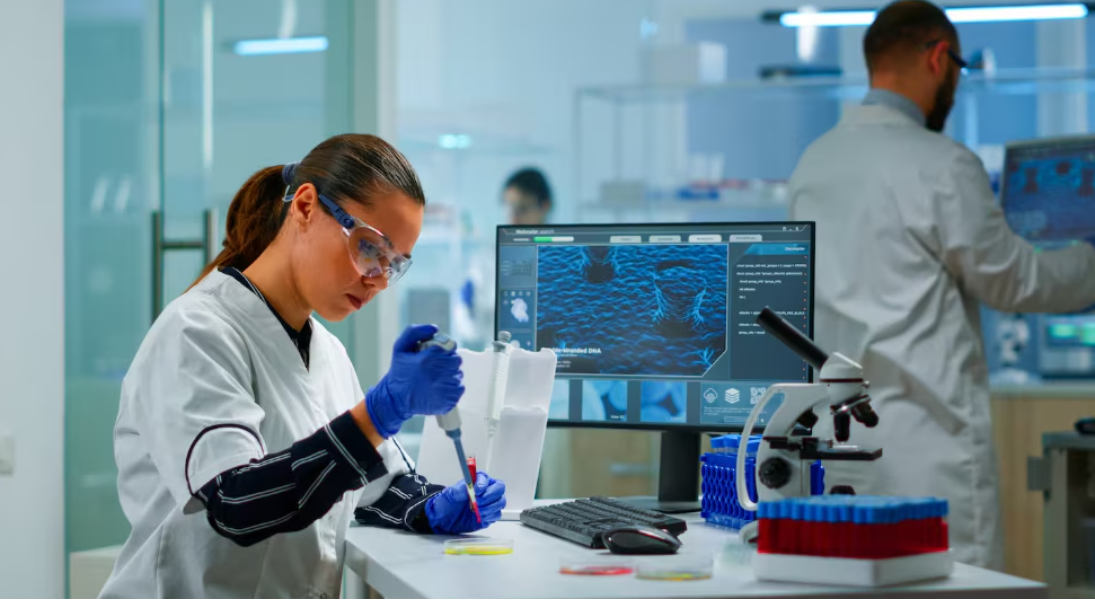
DMLT is not limited to textbook learning. Practical sessions help students become familiar with laboratory workflows and commonly used equipment. Depending on the training facilities available, students may practise tasks such as:
- Collecting and identifying biological samples correctly
- Preparing slides and specimens for examination
- Handling microscopes, centrifuges and analysers
- Following sterilisation and contamination-control procedures
- Recording test observations systematically
- Maintaining patient confidentiality
- Supporting quality-control practices
These skills prepare learners to work responsibly within a diagnostic team while following instructions from pathologists, senior technologists and laboratory supervisors.
Career Opportunities After DMLT in Pune
Pune has a broad healthcare network that includes hospitals, pathology laboratories, blood banks, diagnostic centres and specialised clinics. This creates potential employment settings for trained laboratory personnel across the city and surrounding areas of Maharashtra.
After completing an eligible and recognised DMLT programme, candidates may explore roles such as:
- Medical laboratory technician
- Pathology laboratory assistant
- Sample collection technician
- Phlebotomy technician
- Blood bank assistant
- Diagnostic laboratory technician
- Research laboratory assistant
- Laboratory equipment support executive
Actual job eligibility depends on the course completed, the employer’s requirements and applicable healthcare regulations.
Who May Find DMLT Suitable?
DMLT may suit students who are comfortable working with biological samples, scientific instruments and structured procedures. It can also be appropriate for individuals who are patient, observant and able to maintain concentration during repetitive technical tasks.
Before enrolling, students should check the institute’s eligibility criteria, course duration, practical training arrangements, assessment method and certification details. They should also understand whether internships or clinical exposure form part of the programme.
A DMLT course can provide an accessible starting point for a career in diagnostic healthcare. With disciplined practical training and a strong understanding of laboratory safety, students can develop skills that remain relevant across many medical testing environments.