

Choosing a dialysis technology programme requires careful comparison because students are preparing for a healthcare-support environment where procedures, equipment awareness, hygiene, patient interaction, and teamwork all matter. When evaluating the Best Dialysis Technician Course in Pune, looking beyond course fees and duration can lead to a more informed decision.
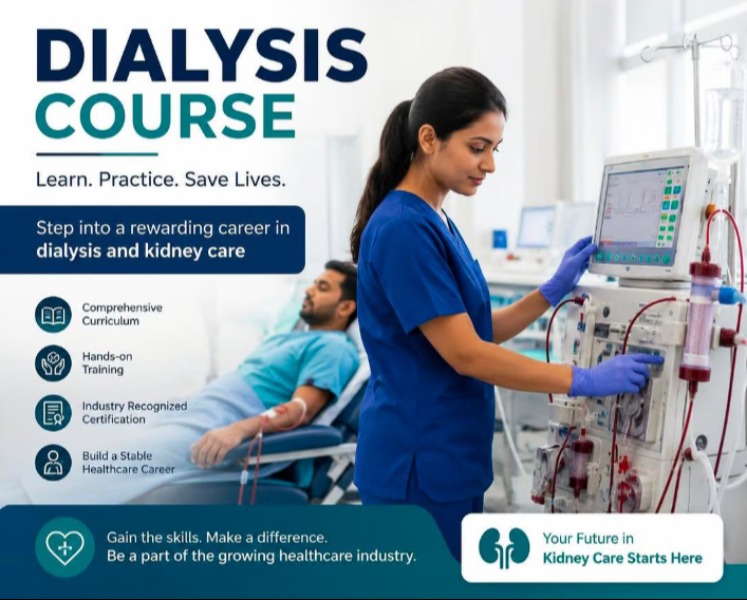
Dialysis-related courses are generally designed to introduce students to renal care support and dialysis procedures within the scope of their training. Curriculum structures vary, but learners may encounter subjects involving kidney function, dialysis principles, equipment, infection-control practices, patient preparation concepts, monitoring, and documentation.
When comparing programmes, focus on five areas.
1. Curriculum depth
Check whether the syllabus provides a foundation in anatomy and physiology before moving into dialysis-specific subjects. Understanding basic renal physiology can make technical topics easier to follow.
2. Practical learning
Dialysis is equipment-oriented and procedure-driven. Ask how practical instruction is delivered and what supervised exposure is included. A programme consisting largely of classroom lectures may provide a different learning experience from one that incorporates structured practical components.
3. Safety and infection control
Students should learn the importance of hygiene, infection prevention, equipment protocols, and professional responsibilities. These are essential considerations in healthcare environments.
4. Qualification details
Verify the precise name of the course, duration, eligibility, assessment process, certification or awarding arrangements, and any applicable affiliation information. Similar-sounding programmes can have different academic structures.
5. Career relevance
Ask what roles the qualification is designed to prepare students for and whether further education may be needed for particular career goals. Avoid relying on broad placement claims without understanding the underlying qualification.
Pune provides a useful setting for allied healthcare education because of its network of hospitals, healthcare facilities, educational institutions, and students arriving from different parts of Maharashtra.
Students considering KP Paramedical Institute can use these same evaluation points when reviewing the available dialysis technician programme. The objective should be to determine whether the training structure matches the learner's educational background and intended career pathway.
Another factor is personal suitability. Dialysis settings can require concentration, patience, professional communication, adherence to procedures, and comfort working around healthcare equipment. Students should consider whether these working conditions align with their interests.
Cost should be assessed in context rather than used as the only deciding factor. Ask what the quoted fee includes, whether practical components or examinations involve additional charges, and what documentation is provided after successful completion.
A strong comparison therefore looks at curriculum, practical exposure, programme status, teaching arrangements, safety education, total costs, and career scope together. For students in Pune and surrounding Maharashtra regions, this approach provides a far more useful basis for selecting dialysis technician training than simply choosing the first programme labelled 'best.'