

Two DNYS programmes can have similar names yet provide noticeably different learning experiences. That makes choosing the Best DNYS Diploma in Naturopathy and Yoga Science less about finding the loudest advertisement and more about identifying a programme whose curriculum, practical learning, and qualification details are clearly explained.
The first mistake students make is focusing entirely on duration and fees.
A lower fee may appear attractive, but it tells you little about curriculum depth, teaching arrangements, practical sessions, assessment, or the exact qualification awarded. Compare the complete programme rather than a single number.
Another mistake is assuming that every naturopathy and yoga course creates the same professional scope. Before admission, students should clearly understand what the qualification is intended for and what activities it does and does not prepare graduates to perform.
Check the syllabus carefully.
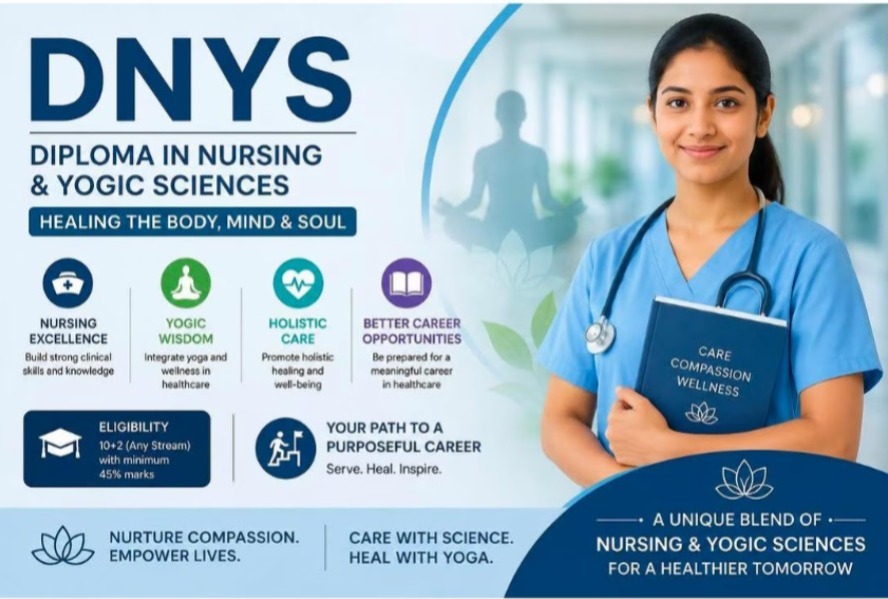
A structured DNYS curriculum may address areas such as yoga science, basic anatomy and physiology, naturopathy concepts, nutrition and lifestyle awareness, yogic practices, relaxation techniques, and related wellness subjects. Actual subjects vary, so request the current syllabus.
Ask about practical training.
Yoga cannot be learned effectively through theory alone. Students benefit from understanding how practical instruction, demonstrations, supervised sessions, and assessments are incorporated into the programme.
Verify the qualification details.
Ask who awards the qualification, what documentation successful students receive, what eligibility rules apply, and whether any affiliation or recognition claims can be clearly documented where relevant.
Avoid relying solely on career promises.
Statements such as 'guaranteed career' or guaranteed income should not replace genuine programme evaluation. Career outcomes depend on the qualification, individual skills, additional requirements, experience, and the type of work pursued.
Pune has a diverse education and wellness environment, making it a common destination for students from Maharashtra who are considering yoga and naturopathy-related learning. The variety of available programmes makes careful comparison even more important.
Prospective learners evaluating KP Paramedical Institute can ask for current information about its DNYS programme, including eligibility, curriculum, teaching format, practical learning, duration, fees, assessment, and qualification documentation.
It is also worth considering your own objective. Someone who wants structured knowledge of yoga and natural wellness may have different requirements from a learner planning further education or pursuing a particular occupational pathway.
A useful final step is to write down five questions before speaking with an institute: What exactly will I study? How will practical skills be taught? What qualification will I receive? What can this qualification realistically be used for? What are my progression options after completion?
Those questions can reveal more than promotional descriptions. Students looking for DNYS education in Pune should choose on the basis of transparent academic information and realistic outcomes, creating a stronger foundation for their future in the wellness field.