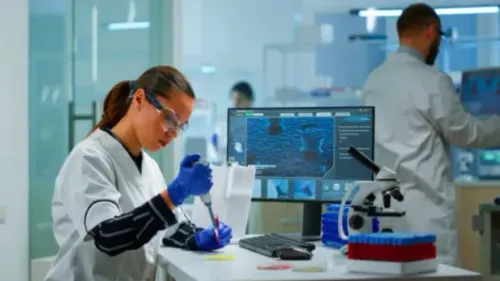



The right choice depends on the job you want, the qualification an employer will accept, and the clinical skills you will actually practise. Use the checks below to compare course types, verify admission and recognition documents, inspect clinical training, and calculate the true cost before you enrol.
Key takeaways
- Choose the healthcare role before comparing course names.
- Check the award, eligibility rules and admission route in writing.
- Ask how each radiology modality is taught and practised clinically.
- Compare tuition, equipment, travel and placement-related costs together.
Start With the Healthcare Role, Not the Course Advertisement
The best paramedical course is the one whose daily work matches what you want to do, not the one with the strongest brochure claim. Decide whether you prefer imaging equipment, laboratory analysis, urgent patient care or surgery-room support before comparing course names.
| Field | Daily work | Patient contact and setting |
|---|---|---|
| Radiography or medical imaging technology | Position patients, operate X-ray, CT or MRI systems, check image quality and follow safety protocols | Regular patient contact in imaging departments; precision and equipment handling matter |
| Medical laboratory technology | Receive specimens, run tests, control sample quality and record results | Limited direct patient contact; most work happens in a laboratory |
| Dialysis technology | Prepare dialysis machines, monitor treatment and respond to changes in a patient’s condition | Extended, close patient contact in a dialysis unit |
| Operation-theatre technology | Prepare instruments, maintain sterile technique and assist the surgical team | High-pressure theatre work with patients under anaesthesia |
Then test your preference against the qualification itself. “Paramedical course” is not one standard award: compare the exact certificate, diploma, B.Voc or B.Sc. title, its eligibility, duration and progression route. Ask which job title employers accept; “100% placement” does not make a graduate a radiologist, radiographer or imaging assistant.
Include examination and university charges, uniform, protective equipment, transport to clinical postings and any mandatory internship in the total cost. A low tuition fee can hide expensive attendance and training requirements.
Match the Award, Eligibility and Admission Route
A Class 12 science pass does not qualify you for every healthcare programme. A brochure calling itself the best paramedical course is not a qualification; match the exact award title to its university, board or statutory framework.
| Award | Entry check | Admission route | Future use |
|---|---|---|---|
| Certificate | Subject and mark rules vary; verify the issuing body | Institute or vocational admission | Entry-level assistant work; limited progression |
| Diploma | Physics, Chemistry, Biology or Mathematics requirements vary | Institute, board or state authority | Technician roles and selected higher-entry routes |
| B.Voc | Class 12 subjects and minimum marks follow the university prospectus | University or affiliated college | Employment plus possible lateral or postgraduate progression |
| B.Sc. Radiology or Medical Radiology and Imaging Technology | Confirm required science subjects, marks and age rules | University or state admission process | Degree-level employment eligibility and postgraduate study |
Before paying, obtain the current prospectus and confirm:
- The precise award title, awarding university or board, duration and affiliation.
- Whether Physics, Chemistry and Biology, or Mathematics, are compulsory; record the minimum percentage and any entrance-test requirement.
- The admission route, age rule, application deadline and required documents, including marksheets, identity proof, transfer certificate and photographs.
- The written job qualification accepted by target hospitals; “100% placement” does not prove eligibility for radiographer, radiologic technologist or imaging-assistant roles.
- The complete cost: tuition, examination and university charges, uniform, protective or radiation-monitoring equipment, clinical-posting transport and mandatory internship expenses.
A diploma is not interchangeable with a B.Sc.; choosing the wrong award can block a preferred job or postgraduate application later.
Audit a Radiology Course Modality by Modality
A serious radiology course in Pune should show what you will do safely, not merely display “medical imaging” in its title. A B.Sc. Radiology or B.Sc. Medical Radiology and Imaging Technology is not interchangeable with a diploma or certificate; duration, clinical exposure, eligibility and postgraduate progression can differ.
Check the syllabus and assessment plan for evidence of:
- Radiographic anatomy, positioning, exposure factors, image quality and artefact correction
- Radiation protection, dose awareness, shielding and pregnancy screening
- CT protocols, patient preparation, contrast-media reactions and emergency response
- MRI screening for implants and ferromagnetic objects, projectile control, hearing protection and restricted access
- Ultrasound fundamentals, PACS, RIS, image transfer and clinical documentation
- Supervised practical examinations, case logs and observed patient-handling assessments
The modality should match the skill being assessed. A course offering only classroom theory and basic X-ray practice is much narrower than its brochure suggests.
| Modality | Evidence to look for |
|---|---|
| X-ray | Positioning, exposure selection, protection and repeat-analysis records |
| CT | Protocol selection, contrast safety and cross-sectional anatomy |
| MRI | Implant screening, controlled access and non-ionising-field safety |
| Ultrasound | Probe handling, orientation, limitations and referral boundaries |
Ask which qualification hospitals accept for the advertised job. “100% placement” does not establish eligibility: employers distinguish between radiologist physicians, radiographers or radiologic technologists, and imaging assistants. Request the written role and qualification requirements before enrolling.
Verify the College, Clinical Posting and Supervision
A claim that an institute is a BSc radiology college in Pune proves nothing about the award. Confirm the degree-awarding university’s recognition and the college’s current affiliation for B.Sc. Radiology or B.Sc. Medical Radiology and Imaging Technology for your admission year. A general university tie-up does not validate every programme.
Request these documents before paying:
- The current affiliation or approval letter naming the exact college, programme and academic year.
- The published curriculum and assessment scheme, including examinations, internal marks and practical assessments.
- The clinical-posting agreement or facility list, with hospital names, departments and available imaging modalities.
- The written refund policy and internship terms, including duration, fees and whether completion is compulsory.
Then contact each listed hospital’s radiology department and ask whether students from that batch attend, who supervises them, how attendance is recorded, and whether students maintain signed case or procedure logbooks. A campus tour, institute-branded certificate or classroom demonstration cannot prove university recognition or authorised clinical training.
Check that supervised practice covers positioning, radiation protection, image quality, contrast-media safety, CT, MRI, ultrasound fundamentals, PACS/RIS and documentation—not only classroom theory or basic X-ray exposure. Ask for the supervisor’s designation and the timetable before enrolling.
Use this same document test at KP PARAMEDICAL INSTITUTE or any competing provider. Finally, ask hospitals recruiting graduates which written qualification they require; “100% placement” does not make a graduate eligible for radiographer, radiologic technologist or radiologist-physician work.
Related product
 | Best BSC.Radiology College In Pune Best BSC.Radiology College In Pune KP Paramedical Institute is recognized as one of the leading institutes for B.Sc. View product → |
Compare the Full Cost and Make a Written Choice
Before paying an admission fee, put every shortlisted option into one scorecard. Record the exact award title, awarding university or board, current programme affiliation, duration, eligibility, clinical hours and total payable cost. Do not rank a diploma against a B.Sc. as if they were interchangeable.
Calculate the full cost, not just tuition. Add examination fees, university or board charges, uniforms, radiation-monitoring or protective-equipment charges, transport to clinical postings and any mandatory internship expenses.
| Criterion | Evidence to record | Scoring rule |
|---|---|---|
| Recognition | Current affiliation for this programme and academic year | Reject unverifiable claims |
| Award and progression | Exact certificate, diploma, B.Voc or B.Sc. title; postgraduate eligibility | Score your career target, not the brochure label |
| Clinical training | Named hospital, posting duration, modalities and supervision | Give no credit for “exposure” without written details |
| Total cost | Tuition plus every compulsory charge and travel expense | Rank by final payable amount |
| Job outcome | Written role and qualification requirements from hiring hospitals | Treat “100% placement” as unproven without evidence |
Give each course a score from 1 to 5, then multiply it by your priorities: recognition and clinical training deserve more weight than uniforms or a small fee difference. A medical imaging course promising only classroom theory and basic X-ray practice should score below a broader programme covering CT, MRI, radiation protection and PACS/RIS.
The best paramedical course is the one with the strongest evidence for your target role, not the phrase “best paramedical course radiology in Pune.” Save the completed comparison and written promises before paying.
Frequently asked questions
How do I choose the best paramedical course in Pune?
Start with the healthcare role you want, then compare the award, eligibility, clinical exposure, supervision and full cost.
What should I check before joining a radiology course in Pune?
Check whether the course covers each relevant imaging modality, names its awarding body, provides supervised clinical postings and states admission requirements clearly.
How can I compare a BSc radiology college in Pune?
Compare the degree-awarding institution, eligibility, hospital postings, equipment access, supervision, assessment method and total course cost.
What is the difference between a medical imaging course and other paramedical courses?
A medical imaging course prepares you for diagnostic imaging work, while laboratory, emergency-care and surgical-support courses lead to different daily tasks and clinical environments.