

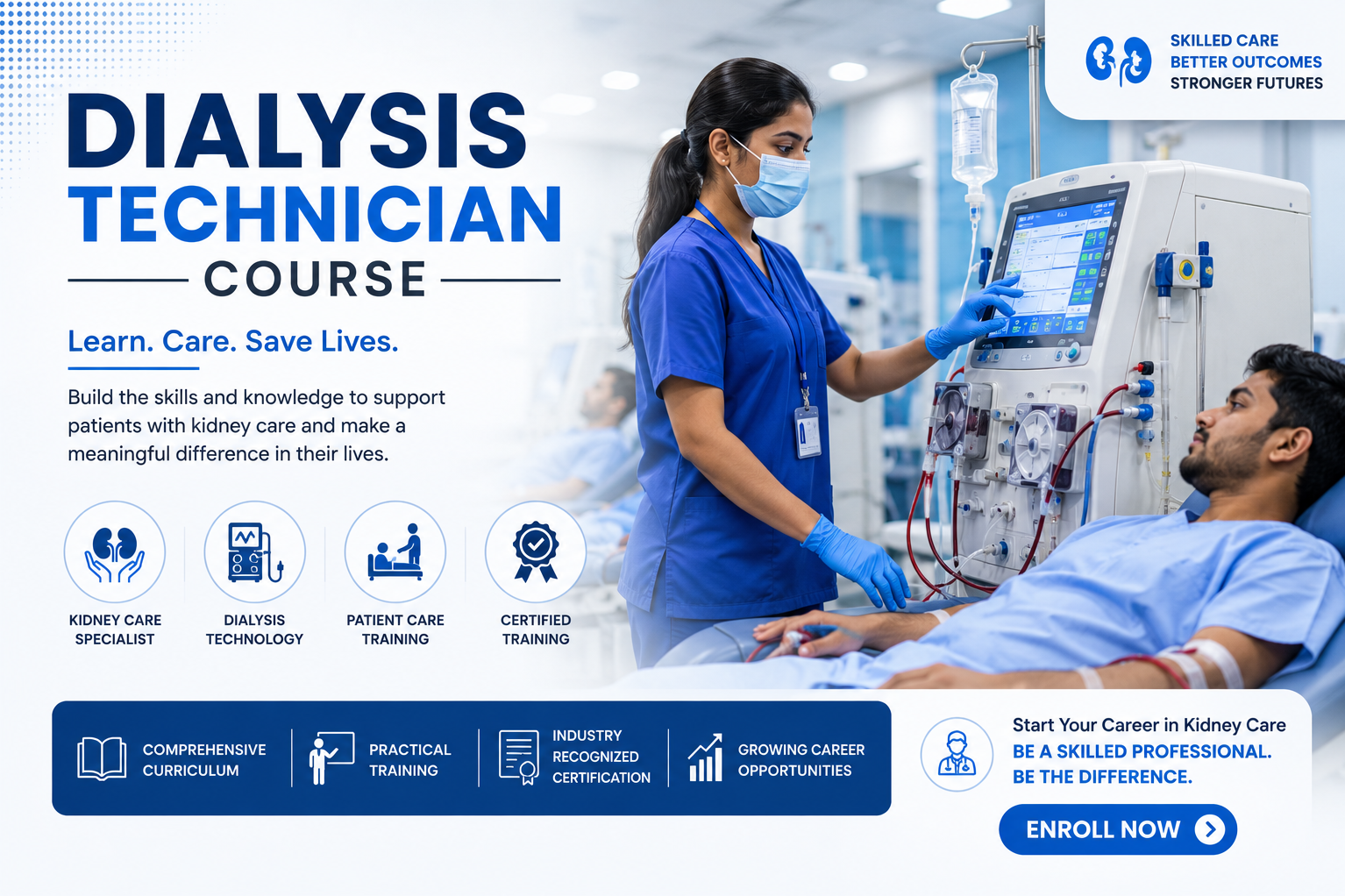
Dialysis supports patients whose kidneys can no longer remove waste products and excess fluid effectively. Although treatment is carried out under medical supervision, trained dialysis technicians contribute to equipment preparation, infection-control procedures, patient monitoring and documentation.
A dialysis technician course introduces students to this specialised clinical environment. For learners in Pune who want a patient-facing paramedical career, the programme can offer focused training connected to renal care.
At KP Paramedical Institute, students can explore healthcare training pathways designed to develop practical awareness alongside theoretical understanding. Anyone considering dialysis technology should first understand the responsibilities and emotional demands associated with the role.
What Does a Dialysis Technician Do?
A dialysis technician generally works as part of a team led by nephrologists, doctors and qualified nursing professionals. Responsibilities vary by healthcare facility, but the role may involve:
- Preparing the dialysis station
- Checking equipment before treatment
- Supporting dialyser and tubing setup
- Following prescribed infection-control procedures
- Recording basic observations as directed
- Monitoring equipment during dialysis
- Reporting unusual readings or patient discomfort
- Cleaning and disinfecting the treatment area
- Maintaining procedural records
- Following biomedical waste-disposal rules
Technicians must work within their defined scope and immediately inform the supervising clinical professional when a concern arises.
What Is Usually Taught in the Course?
A structured dialysis technician programme may cover basic medical sciences before moving into renal-care concepts. Common learning areas include:
- Human anatomy and physiology
- Structure and function of the kidneys
- Causes and effects of kidney failure
- Principles of haemodialysis
- Dialysis machine components
- Water treatment basics
- Vascular access awareness
- Patient preparation and observation
- Infection prevention
- Emergency-response protocols
- Medical ethics and communication
Course content, duration and clinical requirements can differ. Students should review the current syllabus and eligibility conditions before applying.
Personal Qualities Needed in Dialysis Care
Dialysis is not a one-time procedure for many patients. Individuals may return to the treatment centre regularly, which means technicians often work with the same patients over an extended period.
The following qualities are especially valuable:
- Attention to detail: Equipment settings and procedural checks must be handled carefully.
- Emotional stability: Patients may feel anxious, tired or physically uncomfortable.
- Clear communication: Instructions and observations should be communicated accurately.
- Respect for hygiene: Infection-control practices must be followed consistently.
- Team discipline: Dialysis care requires coordination with doctors, nurses and other technicians.
- Physical readiness: The role may involve standing for long periods and assisting with treatment-area preparation.
Learning Dialysis Technology in Pune
Pune has multispeciality hospitals, renal-care units and standalone dialysis centres serving patients from the city and other parts of Maharashtra. This healthcare setting can help students appreciate how renal-care teams operate in different clinical environments.
When comparing institutes, applicants should examine the availability of practical demonstrations, clinical exposure and supervised learning. A classroom-only understanding is not enough for a role involving medical equipment and vulnerable patients.
Is This Course the Right Choice?
Dialysis technology may suit students who want to combine technical responsibilities with direct patient support. It requires compassion, consistency and the ability to work calmly under supervision.
Before enrolling, students should confirm the recognition of the qualification, programme duration, assessment process and clinical training arrangements. Choosing a course with meaningful practical exposure can help learners understand the real standards expected inside a dialysis unit.