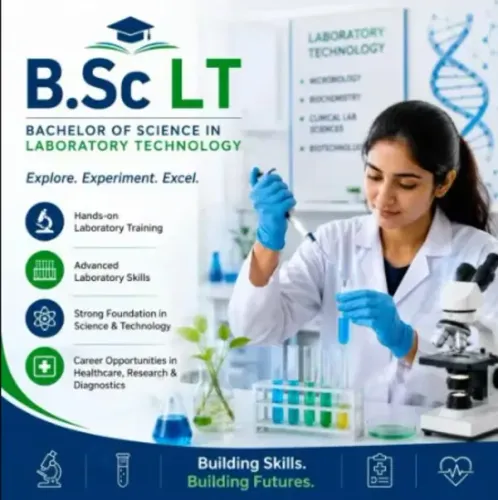


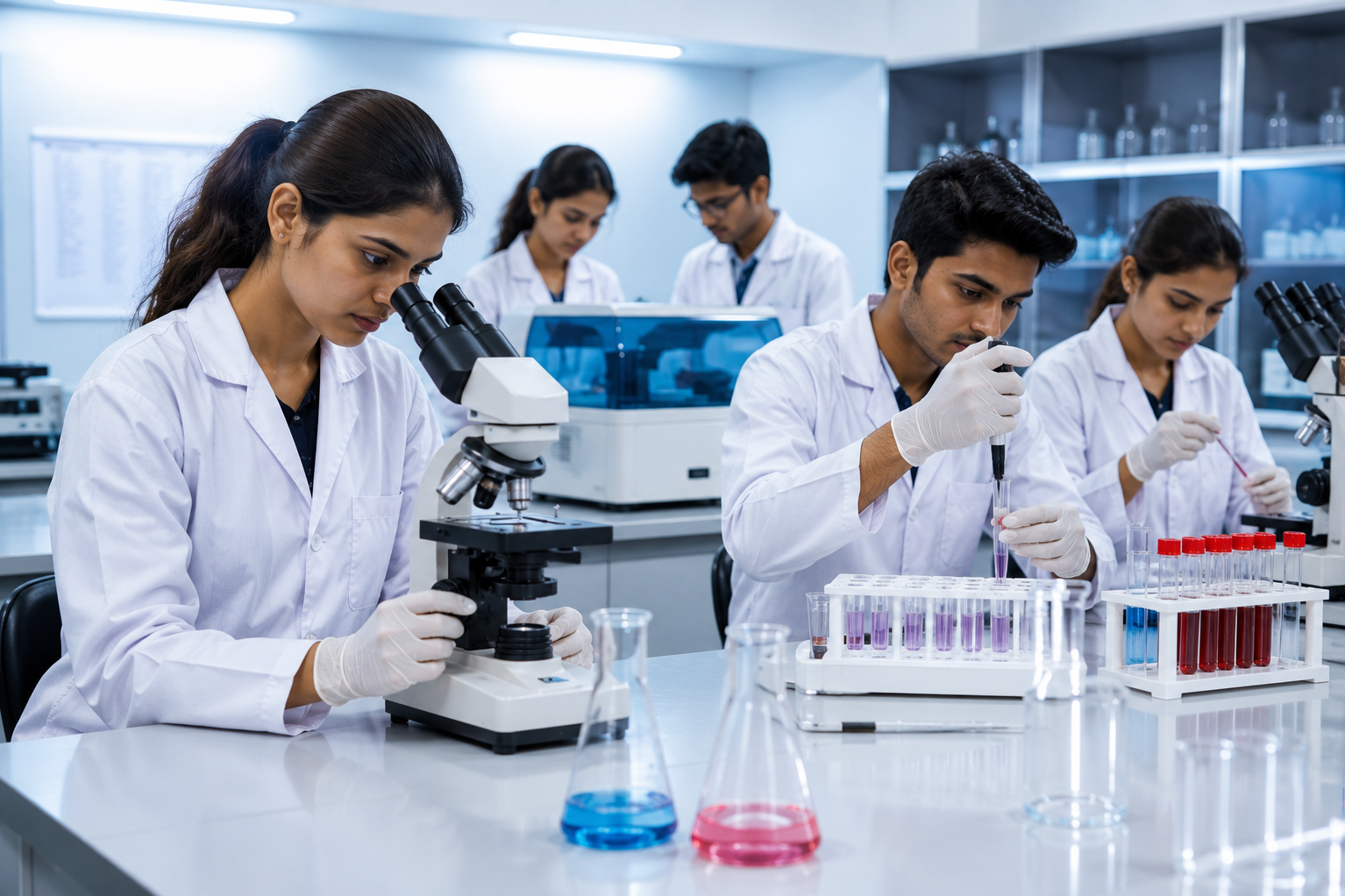
A Bachelor of Science in Laboratory Technology is designed for students who want a deeper academic and practical understanding of diagnostic science. Unlike short-term introductory programmes, a B.Sc. LT course generally covers laboratory disciplines in greater detail and develops the analytical skills needed for increasingly technology-driven healthcare environments.
Students searching for a B.Sc. Laboratory Technology course in Pune should evaluate more than the course name. Curriculum quality, laboratory access, clinical exposure and faculty guidance can significantly influence the learning experience.
KP Paramedical Institute helps students in Pune explore paramedical learning pathways connected to healthcare and diagnostics. Before admission, however, every applicant should understand what the programme involves and whether it matches their interests.
How Is B.Sc. LT Different From Basic Laboratory Training?
Basic laboratory courses may focus primarily on routine procedures and entry-level technical skills. A B.Sc. LT programme usually provides broader scientific learning and may include detailed study of:
- Clinical biochemistry
- Medical microbiology
- Haematology
- Histopathology
- Immunology and serology
- Molecular diagnostic principles
- Blood banking and transfusion practices
- Laboratory management
- Quality assurance
- Research methodology
The degree-level approach can help students understand not only how a test is performed but also the scientific reasoning behind it.
Important Questions to Ask Before Admission in Pune
Choosing a course requires careful evaluation. Students and parents can use the following questions while comparing available programmes:
- What are the current academic eligibility requirements?
- Which institution or examining body awards the qualification?
- How much practical laboratory training is included?
- Are students given supervised clinical or diagnostic-centre exposure?
- What equipment is available for demonstrations and practice?
- How are practical competencies assessed?
- Does the curriculum include laboratory safety and quality control?
- What student support is available for internships and career preparation?
Getting clear answers prevents students from relying only on advertisements or broad employment claims.
Skills Needed for Laboratory Technology
A successful laboratory technology student needs more than an interest in biology. The work demands consistency, accuracy and respect for safety protocols.
Students should be willing to develop:
- Careful observation
- Accurate documentation
- Basic numerical ability
- Scientific reasoning
- Time management
- Ethical handling of patient information
- Teamwork with healthcare professionals
- Responsible use of instruments and reagents
Communication also matters. Laboratory personnel may need to coordinate with nurses, doctors, collection staff and administrative teams, even when they do not interact extensively with patients.
Career Settings Across Pune and Maharashtra
Graduates may explore appropriate openings in hospitals, pathology laboratories, diagnostic chains, blood banks, research organisations and healthcare companies. Some may also pursue further education in specialised laboratory sciences, hospital administration, public health or related disciplines.
The availability of a particular role depends on the graduate’s recognised qualification, practical competence, recruitment criteria and regulatory requirements. Students should treat practical training as an essential part of professional preparation rather than merely a course formality.
Making an Informed Decision
A B.Sc. LT course may be suitable for students looking for structured, degree-level education in medical diagnostics. Before enrolling, compare the syllabus, learning facilities and practical exposure offered by the institute.
Pune’s expanding healthcare and diagnostic sector gives students access to a relevant learning environment. The strongest foundation comes from selecting a programme that balances scientific knowledge, supervised practice, laboratory ethics and dependable assessment.